 pipobscure
Blog ·
\-_Creighton_
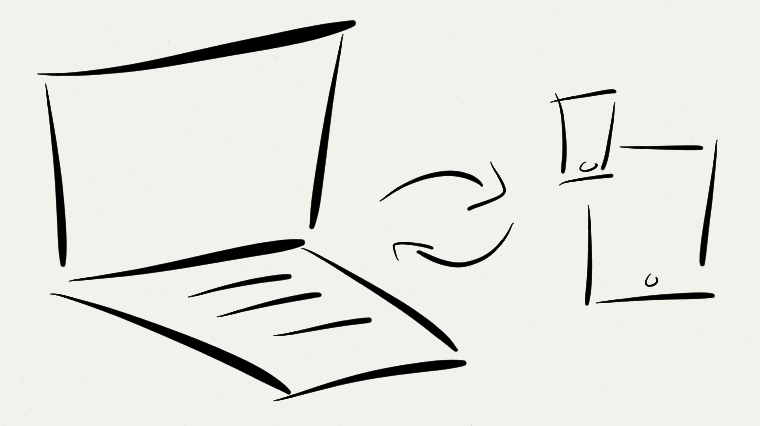
The Internet and The Mobile Web
The internet is divided and it has been for some time. Even though it’s now 2014, there are still two very distinct internets. There’s the regular web we all know on computers. The internet we see in Chrome, or Safari, or Internet Explorer. And there’s the mobile web. And it’s really unfortunate that these two things can be so different. That there even is such a thing as the “regular” internet. That I have to differentiate. That anyone differentiates.
I would like to say that it’s one group of people causing the problems, but it’s everyone and most of it makes no sense. We keep hearing the same thing repeated over and over “the mobile web is the web.” Just a few weeks ago Google chairman Eric Schmidt said,”the trend has been mobile was winning; it’s now won. There are more tablets and phones sold than personal computers. People are moving to this new architecture very fast.”
Yet Google’s own products do not show parity on the web and on mobile, within apps or on mobile sites. If you visit m.youtube.com it is impossible to find an embed code. You click the share button, but the options are just for links. The YouTube app yields the same results. I can share on Google +, Twitter, Facebook, Email, but can’t find an embed code if I want to share it anywhere else.
The share options on a computer are much more robust and I have the option to get the embed code, if I so choose.
Not that getting an embed code would help me on Tumblr. On Tumblr’s iOS app you don’t even have the option to embed a video, even if you could find an embed code. You can only upload a video directly to Tumblr. I’m sorry Tumblr, but no one wants to use your video player.
Hulu is another odd bird. I pay for Hulu Plus (I don’t have cable and I like watching TV shows on my Xbox). Yet, sometimes when I want to watch a show it tells me that it’s “web only.” Huh? So Hulu doesn’t think an Xbox is the web. I can get Twitter, Facebook, Skype, and most importantly Hulu, but it’s not the web. And I need to use a laptop to access the content I’m paying for.
Never mind that sometimes videos are just not playable on mobile devices. Once US Weekly once told me to read one of their articles on a computer.
I do wish I was kidding. Nice to know that 524 people liked it though.
And just this week NHL.com wouldn’t let me watch highlights on my computer, but I was allowed to watch them on the NHL’s GameCenter iOS app. The pop over wasn’t asking me to log in it wanted me to upgrade to the next tier. I already I pay for the lowest level of GameCenter so I can listen to the radio broadcasts of Ranger games on my phone - a feature that’s completely free at NHL.com.
These are just a few of the issues that form the great divide that is the internet and the mobile web. Mobile citizens are still deemed second class, even when the Chairman of the largest internet company declared mobile has won.
As a user, and often times as someone paying to see content, it’s incredibly frustrating when there is any kind of disparity. Why I can watch a NHL highlight on my phone and not on my computer is absolutely bonkers. And it makes me want to murder.
I don’t really know how to fix this problem going forward. The only thing I can think of is for any developers to read this and implement any functionality in on your website or on the desktop version of your application, put it in your app, and vice versa. Because as long as the little things like a lack of embed codes exists the New York Times will double bill you to see certain parts of their content digitally.
_Quick note: I’ve tried to write this article a few times, in 2011 and again in early 2013, but stopped because I felt like it was too long. It pains me that 3 years later it’s still an issue.
_-Creighton


